Residential Drywall & Stucco Services in Calgary
Residential Drywall & Stucco Services in Calgary
Calgary’s freeze-thaw cycles do a number on stucco. Every winter, moisture works its way into small cracks, freezes, expands, and makes those cracks bigger. By spring, what was a hairline crack in October is now a visible gap letting water behind the wall. We get more stucco repair calls between April and June than the rest of the year combined. And most of them start the same way — someone noticed a crack they don’t remember seeing last fall.
The good news is that most stucco damage is repairable. You don’t need to tear everything off and start over. But you do need to catch it before moisture gets behind the stucco and starts rotting the sheathing or corroding the lath. That’s when a simple repair turns into a full remediation project.
Not all stucco damage is the same, and the type of damage tells us a lot about what’s going on underneath.
Hairline cracks are the most common thing we see. These are thin surface cracks caused by seasonal expansion and contraction. Calgary’s temperature swings — we can go from -25°C to +5°C in a single chinook — put constant stress on stucco surfaces. Most hairline cracks are cosmetic. But they’re also entry points for water, so they shouldn’t be ignored.
Structural cracks are wider, often diagonal, and sometimes follow a stair-step pattern. These can indicate foundation settlement or movement in the framing. If we see cracks wider than 3mm or cracks that keep coming back after repair, we’ll recommend getting a structural assessment before we patch anything. No point fixing the stucco if the underlying problem is still active.
Chips and impact damage happen from hail, ladders, landscaping equipment — anything that hits the wall hard enough. Calgary gets its share of hailstorms, and older stucco that’s already weathered is more brittle and more prone to chipping.
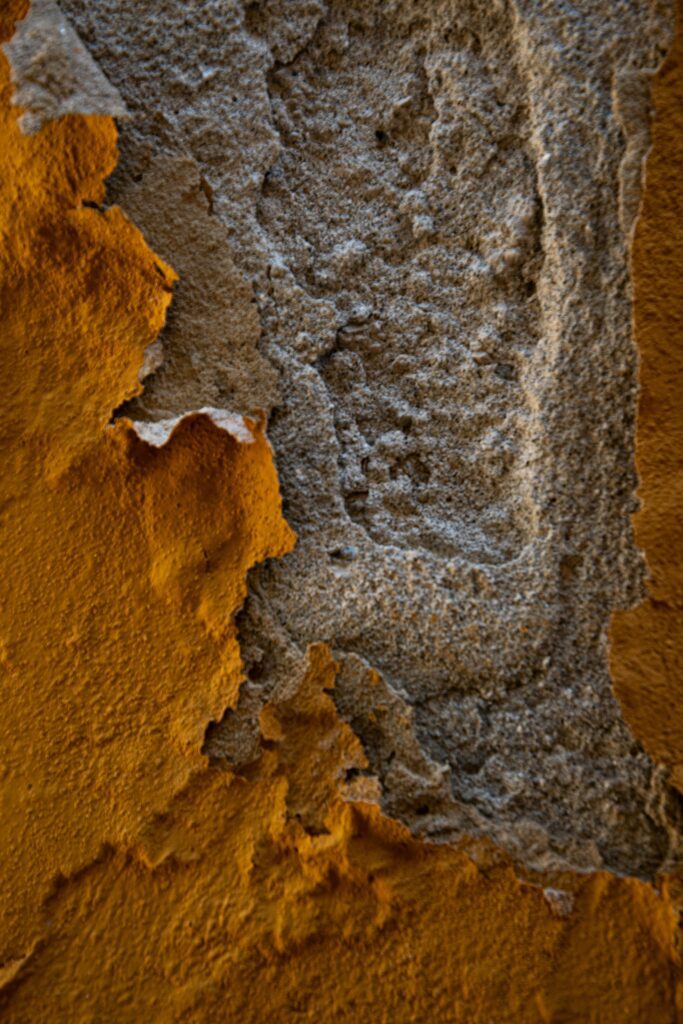
Delamination is when the stucco pulls away from the substrate. You can sometimes spot it by tapping the wall — a hollow sound means the bond has failed. This is more serious than surface cracks because it means the stucco layer isn’t attached properly anymore. Water gets behind it, freezes, and accelerates the separation.
Water staining and efflorescence — those white, chalky deposits on the surface — tell us moisture is moving through the wall. The white residue is mineral salts being carried to the surface as water evaporates. It’s not just ugly. It means water is getting in somewhere it shouldn’t be.
Damage around windows and doors is extremely common on Calgary homes. This usually comes down to flashing failures. The metal flashing that diverts water away from openings deteriorates over time, and once it fails, water runs directly behind the stucco. We see this constantly on homes built in the 1990s and 2000s where the original flashing wasn’t installed properly — or wasn’t installed at all.
We don’t just slap a coat of stucco over the damage and call it done. That’s a patch, not a repair. Here’s how we actually do it.
First, we assess the full extent of the damage. What looks like a small crack on the surface sometimes hides bigger problems behind the wall. We’ll tap around the damaged area to check for delamination, probe any cracks to see how deep they go, and look for signs of moisture intrusion. Sometimes a 6-inch crack means 6 inches of repair. Sometimes it means 6 square feet. We need to know before we start cutting.
We remove all loose and damaged stucco. Everything that’s cracked, hollow-sounding, or not bonded properly comes off. Patching over compromised stucco just means doing the job twice.
We inspect the underlying lath and substrate. Once the damaged stucco is off, we check the metal lath, the building paper, and the sheathing underneath. If the lath is corroded or the building paper is torn, those get replaced before any new stucco goes on. Skipping this step is how repairs fail within a year or two.
We re-apply stucco in proper layers. Traditional three-coat stucco means a scratch coat, a brown coat, and a finish coat — each one cured before the next goes on. For smaller repairs, a two-coat process with a bonding agent works well. Either way, the layers need time to cure. Rushing this leads to cracking.
Then comes the color matching — honestly the hardest part of any stucco repair. More on that below.
This is the question we get asked most, and the honest answer depends on how much of the wall is damaged.
Repair makes sense when you’re dealing with isolated cracks, a few chips, or damage in one area — say around a window or along a corner. If the rest of the stucco is solid and well-bonded, there’s no reason to tear it all off. A targeted repair is faster, cheaper, and gets you back to a weather-tight wall.
Re-stuccoing the whole wall — or the whole house — starts making sense when the damage is widespread. If we’re seeing cracking across multiple walls, large areas of delamination, or evidence of moisture behind the stucco in several spots, patching individual areas becomes a game of whack-a-mole. You fix one spot and another one shows up next spring.
Our general rule: if more than 30% of a wall’s surface is damaged or compromised, a full re-stucco is usually more cost-effective than multiple repairs. You get a uniform finish, new building paper and lath where needed, and a warranty on the entire surface instead of a patchwork of repairs done at different times.
If you’re not sure which direction to go, we’ll give you an honest assessment. We’d rather do one proper re-stucco than come back three times for repairs that keep expanding. If you’re also dealing with interior wall damage from moisture, we handle drywall repair as well — so we can address both sides of the problem in one project.
This is the part nobody warns you about until the repair is done and there’s a bright patch on your wall that doesn’t match the rest. Here’s why it’s tricky.
Fresh stucco is always lighter than weathered stucco. Always. Even if we mix the exact same pigment that was used on the original application, the new patch will look different because the surrounding stucco has had years of UV exposure, rain, dirt, and Calgary’s lovely chinook dust darkening it. The new stuff hasn’t had any of that yet.
We have two approaches, and we’ll be upfront about the trade-offs of each.
Option one: match as close as possible and let it weather in. We custom-mix the stucco color to get as near to the existing wall as we can. It won’t be a perfect match on day one. But over 6 to 12 months of exposure, the new stucco darkens and blends in with the surrounding surface. For small repairs, especially on walls that aren’t highly visible, this works well. You just need patience.
Option two: paint the entire wall after the repair cures. If the repair area is large, or if the wall faces the street and you want a uniform look immediately, painting the full wall gives you a perfect color match right away. The trade-off is the added cost of paint and the fact that painted stucco needs repainting every 8 to 10 years, whereas unpainted stucco is essentially maintenance-free on the color front.
We’ll always discuss color matching expectations before we start so there are no surprises when the scaffolding comes down.
It depends entirely on the size and type of damage. A simple crack repair on a small area might run $300 to $600. Larger repairs involving lath replacement and multiple coats can range from $1,000 to $3,000 or more. We provide free estimates so you know exactly what you’re looking at before any work starts. If the damage is extensive enough that a full re-stucco makes more sense, we’ll tell you that upfront — check our stucco services page for more on what we offer.
Stucco needs temperatures above 5°C to cure properly, and ideally above 10°C. In Calgary, that realistically means we’re doing stucco repairs from April through October. We can do emergency patches in cooler weather using accelerated-cure products, but for a lasting repair, you want proper curing conditions. That’s why spring is our busiest season — everyone notices their winter damage and wants it fixed before it gets worse.
A properly done stucco repair should last 15 to 20 years or more, assuming the underlying cause of the damage was addressed. If the original damage was from a one-time impact or normal weathering, the repair will hold. If it was from an ongoing issue — bad flashing, foundation movement, poor drainage — and that issue wasn’t fixed, the damage will come back. That’s why we always look for the root cause, not just the surface damage.
Yes. Cracked stucco is one of the first things home inspectors flag, and buyers in Calgary know that stucco damage can mean moisture problems. Even small cracks can raise concerns during a home inspection and give buyers leverage to negotiate the price down. Getting repairs done before listing is almost always cheaper than the price reduction you’d take at the negotiating table. It also signals that the home has been well maintained — which matters in Calgary’s market.
Stucco damage doesn’t fix itself. Every freeze-thaw cycle makes cracks wider, lets more moisture in, and increases the scope of the eventual repair. If you’ve noticed cracking, chipping, or staining on your stucco, give us a call. We’ll come out, assess the damage, and give you a straight answer on what needs to be done — whether that’s a targeted repair, a full re-stucco, or just keeping an eye on it for now.
We also handle residential drywall work, so if moisture from stucco damage has affected your interior walls, we can take care of both in one project.
Call RC Stucco and Drywall at (403) 969-0155 for a free stucco repair assessment.