Residential Drywall & Stucco Services in Calgary
Residential Drywall & Stucco Services in Calgary
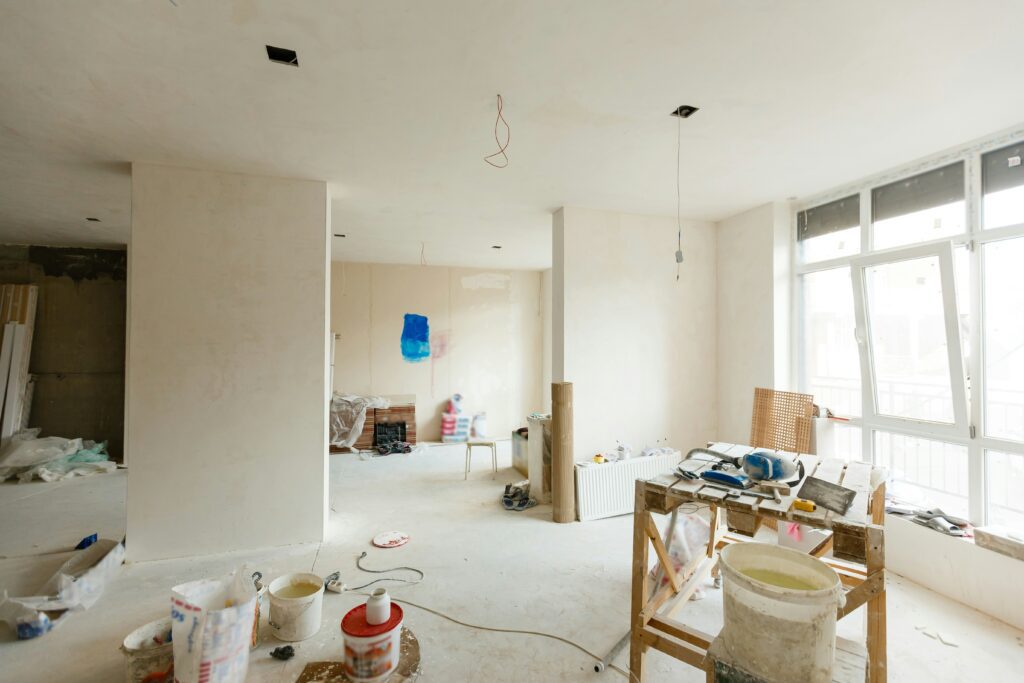
RC Stucco and Drywall works on homes. That’s it. We don’t bid on office towers, retail buildouts, or commercial warehouses. Every job we take is someone’s house — a basement they want to finish, a bedroom addition they’ve been planning for two years, or a new build going up in one of Calgary’s growing communities.
That focus matters more than most people realize. Residential drywall isn’t just smaller-scale commercial work. The standards are different. Homeowners notice things a tenant in a strip mall never would — a seam that catches the afternoon light, a corner bead that’s not perfectly straight, a texture that doesn’t match the rest of the house. We’ve built our crew and our process around getting those details right, because you’re the one living with the result.
Most of our work falls into a handful of categories that Calgary homeowners deal with over and over:
No matter the project, the process stays the same: measure, plan, hang, tape and mud, then texture and finish to match your home.
We need to talk about basements specifically because they make up roughly half our residential work. Calgary sits on clay soil. Our winters hit -30°C. And almost every home built here in the last 40 years has an unfinished basement just waiting for someone to finally do something with it.
Basement drywall installation isn’t the same as drywalling a main floor bedroom. There are steps you can’t skip — and we’ve seen what happens when people try.
Before any drywall goes up, the envelope has to be right. That means:
Common mistakes we see on DIY or poorly managed basement projects:
Get the prep work right and the drywall installation goes smoothly. Rush the prep and you’ll be calling someone for drywall repair sooner than you’d like.
A lot of our residential jobs happen as part of a bigger renovation. You’ve got a general contractor running the show, and we’re one of several trades cycling through the house. We’re used to that rhythm.
Here’s how drywall fits into the typical sequence:
Timeline expectations for a typical Calgary basement finish (roughly 800-1,000 sq ft):
So plan for about 7-10 days from the time we start to the time painters can get in. We’ll coordinate directly with your GC on scheduling so there’s no dead time between trades.
We work across Calgary and the surrounding communities. Our crews are based in the city, so we’re not driving in from Red Deer and tacking travel time onto your quote.
Northwest Calgary: Tuscany, Royal Oak, Evanston, Sage Hill, Nolan Hill, Kincora. Lots of newer homes in these communities with unfinished basements ready for development. The homes built out here in the 2010s typically have open-concept basements that are straightforward to finish.
Northeast Calgary: Skyview Ranch, Cornerstone, Redstone, Cityscape. Some of Calgary’s newest communities with active new-build projects. We work with several builders in the NE on new construction drywall.
Southwest Calgary: Aspen Woods, Springbank Hill, Signal Hill, Strathcona Park. Established neighborhoods with larger homes. We see a lot of renovation and addition work in the SW — homeowners updating older finishes or adding space rather than moving.
Southeast Calgary: Mahogany, Seton, Cranston, Auburn Bay, Legacy. The SE has exploded with new development over the past decade. Basement finishing is huge out here as homeowners settle in and finally get around to that lower level.
Inner city: Kensington, Bridgeland, Inglewood, Marda Loop, Altadore, Ramsay. Inner-city work often means older homes with plaster-to-drywall conversions, tight access, and the need to match character details. Different challenges than a suburban basement, but we handle both.
We also take jobs in Airdrie, Cochrane, Chestermere, and Okotoks when the project scope makes sense.
It depends on the size, layout, and finish level, but most Calgary basement drywall projects fall between $8,000 and $18,000 for a standard 800-1,200 sq ft basement. That includes hanging, taping, mudding, and texturing. Complex layouts with lots of bulkheads, soffits, and small rooms cost more than open-concept designs. We provide free quotes so you get a number specific to your space — not a rough guess.
If you’re finishing a previously unfinished basement, yes — the City of Calgary requires a development permit for basement finishing. The permit covers the full scope including framing, electrical, plumbing, and drywall. Your general contractor usually handles the permit application and inspection scheduling. We won’t hang drywall until rough-in inspections have passed, because nobody wants to tear open a freshly finished wall for an inspector.
We use moisture-resistant drywall (often called green board or purple board) in any room with plumbing fixtures — bathrooms, laundry rooms, utility rooms, and behind wet bars. For areas directly around showers and tubs, we use cement board backer rather than drywall, since even moisture-resistant drywall isn’t rated for direct water contact. It costs a bit more than standard board, but it’s not worth cutting that corner in a room that’s going to see moisture every day.
Yes. Texture matching is a big part of renovation and repair work. The most common textures we match in Calgary homes are knockdown, orange peel, and smooth finish. We’ll look at your existing walls, test our technique on a scrap piece first, and make sure it blends before we apply it to the finished surface. Older homes sometimes have hand-applied textures that are trickier to match exactly, but we get it close enough that you won’t notice the difference once it’s painted.
Whether it’s a basement finish, a renovation, or new construction — we’d like to hear about your project. Give us a call at (403) 969-0155 to talk through what you’ve got planned. We’ll give you an honest timeline and a straightforward quote. No pressure, no runaround.